Canada is proud to be one of the world’s most multicultural nations. Since adopting multiculturalism as official policy in 1971 and enshrining it in the Canadian Multiculturalism Act, Canada has embraced diversity as a source of strength and social cohesion. This vision is increasingly reflected in Iqaluit, a growing northern city where Inuit traditions thrive alongside a diverse population from across Canada and around the world. Against this backdrop and inspired by the unifying spirit of the FIFA World Cup 2026 co-hosted by Canada, the Real Life Institute, with funding support from the Government of Canada’s Department of Canadian Heritage through the Celebrate Canada Program, brought residents together through soccer and a community food festival to celebrate diversity, inclusion, and cross-cultural understanding on June 27, 2026.
Real Life Institute’s Multiculturalism Day Soccer Game
The multiculturalism day celebration began with a mixed-gender soccer game at the Arctic Winter Games Arena. The game brought together men and women from diverse cultural backgrounds.
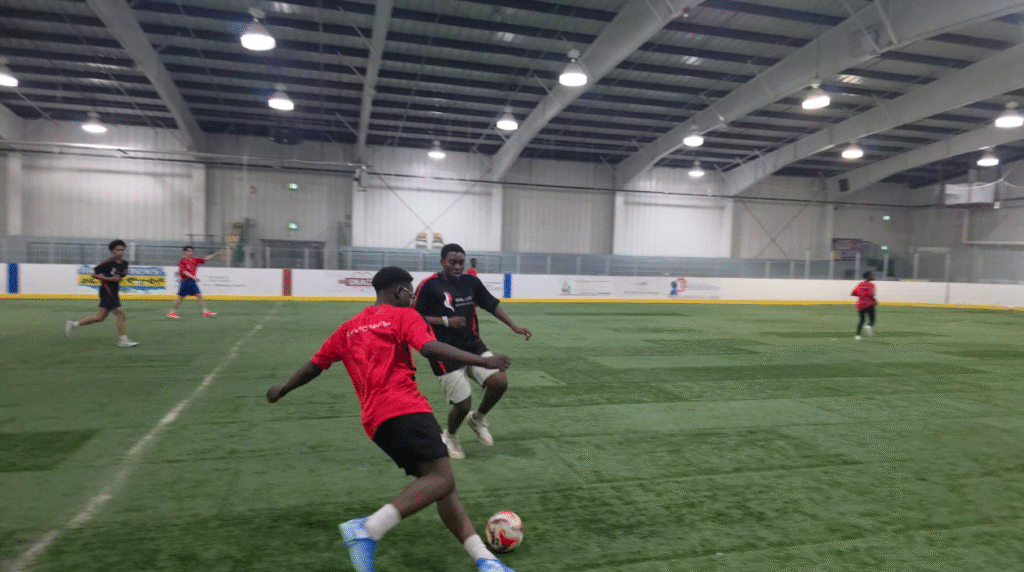
Players in Action: Real Life Institute’s Multiculturalism Day Soccer Game
Players were dressed in custom jerseys inspired by Canada’s national colours and the Canadian Men’s National Soccer Team kit worn during the FIFA World Cup 2026, bringing a touch of World Cup spirit to Iqaluit. Team A, wearing black jerseys, consisted of members of the LECUDO and Afro-Caribbean communities in Iqaluit, while Team B, dressed in red, was made up of Real Life Institute staff and volunteers. Team A secured a 3 – 2 victory. Medals were awarded to players, while volunteers provided refreshments after the match, creating an opportunity for participants and spectators to connect and celebrate together.
Among the players was Gabriel Salvoni, who said the match lived up to its friendly spirit.
“I felt pretty good, honestly. I had a lot of fun. I like my teammates, Elvis and the ladies too; they seem really friendly.”
Fellow player Pilar shared the same enthusiasm for the match and for Real Life Institute’s role in bringing it together.
“It was good. Yes, I am excited playing with Real Life Research Institute. I’m excited to come back. I just realised I’m not that fit, so I’ll start sprinting to get ready to join the Institute.”
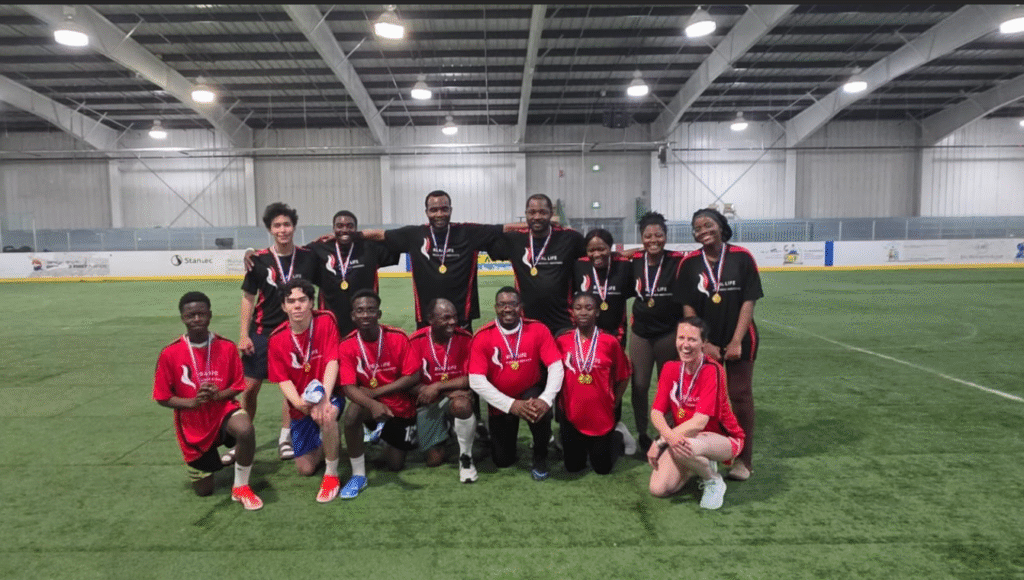
Team A (in black) and Team B (in red) pose for a post-match group photo at the Arctic Winter Games Arena
The Iqaluit Multicultural Food Festival
In the morning through the afternoon of June 27, 2026, community members across Iqaluit gathered at Aqsarniit Hotel for a multicultural food festival. Residents shared traditional dishes, stories, and cultural experiences from across cultures. The event also featured family-friendly children’s activities, creating opportunities for young people to learn about different cultures. Community members arrived dressed in traditional regalia representing their heritage, from colourful African prints to Jamaican attire, creating a warm and welcoming atmosphere that reflected the growing diversity of Iqaluit.
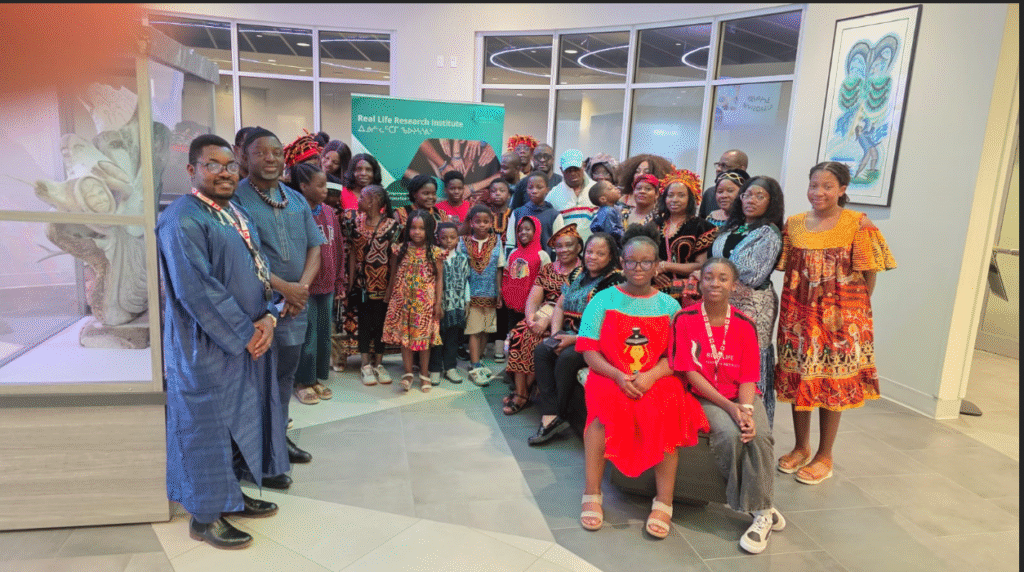
Members of the Afro-Caribbean community posed for a group photo in front of the event hall before the start of the event.
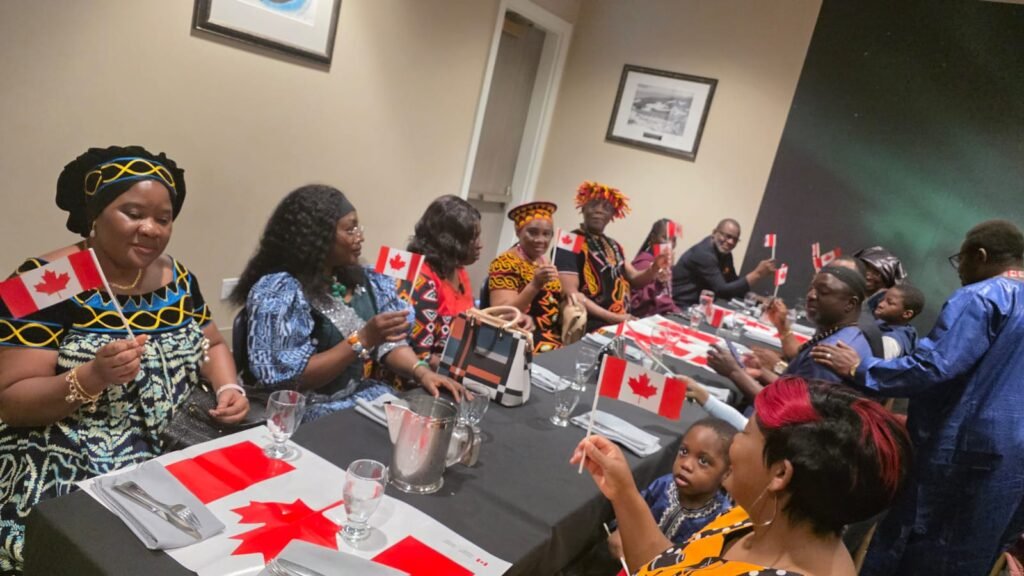
The Canadian flag and other Celebrate Canada promotional materials, generously provided by the Department of Canadian Heritage, were displayed throughout the event, symbolizing Canada’s commitment to diversity, inclusion, and unity. As Nunavut’s capital continues to welcome people from across Canada and around the world, creating meaningful spaces for intercultural exchange has become increasingly important.
Multiculturalism Day 2026: Community members in Iqaluit proudly display the Canadian flag
A central highlight of the day was the Cultural Food Tasting Experience, where representatives from various cultural and community groups introduced tasting stations featuring traditional dishes from their countries and cultures. Participants experienced an impressive range of culinary traditions while learning about the history, significance, and stories behind each dish.
Following the introductions, community members gathered for a shared meal that brought people of different backgrounds to the same table.
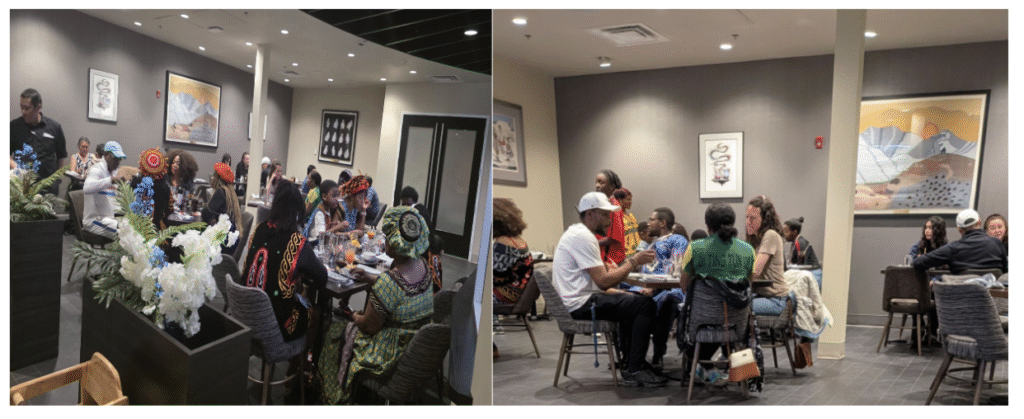
Participants ready for their first Iqaluit Multicultural Food Tasting Experience
The conversations that emerged, across languages, traditions, and experiences, reflected exactly what the festival set out to achieve. Among those who experienced the day was Tasha, a Jamaican community member who described the atmosphere as one of genuine openness. In her words:
“It was a great experience coming here and seeing everybody come together, seeing everybody showcase their culture, and having an opportunity to socialise with other people and learn more about other people’s culture.”
Tasha also reflected on how Iqaluit itself has changed:
I honestly think we are more diverse than we were when I first came here. It’s great to see other cultures coming in because it’s an opportunity for us to learn about other people’s culture, for Inuit to showcase their culture, for Inuit to learn about other people’s culture, and for us to come together.
That spirit of openness was echoed across the venue. Also in attendance was Dr. EkuaAgyemang, Chief Public Health Officer for the Government of Nunavut. Ekua reflected on the benefits of bringing people from different backgrounds together in a growing community like Iqaluit. She remarked:
It’s really great that we can have all cultures come together and live together in peace. Diversity is the spice of life. When everyone with their own perspective and different cultures comes together, we have strength, because someone’s strength might be another person’s weakness. We learn from each other, work together, and build a community that is strong for all of us.
For Monica, the experience was both educational and encouraging:
It was great. It was nice to see everybody in different attire that represents their cultures, and we were able to share the space together. I think Iqaluit is growing, and there are a lot of different cultures making Iqaluit their home. It’s a good time to learn about different cultures, traditions, foods, and folklore.
The event also gave local cultural organisations a platform to connect and engage with the community. Clarice, President of the Bamendian Association, described the day as both a celebration and an opportunity:
It’s been a fantastic experience. This is a great initiative. We want to see more of this happening in the community so that we can showcase our culture. I love everything that has to do with culture, and I enjoy learning about different cultures because that’s how we understand each other better.
Clarice, who encountered RLRI for the first time at the festival, left with a clear intention.
Honestly speaking, this is my first time, and I’m really interested in knowing more about it. My plan is to volunteer in activities like this that come up every once in a while. I would love to be part of this, and I’m pretty sure the members of my association, the Bamendian community, would love to be part of this kind of activity too.
The festival also highlighted the important role young volunteers play in building inclusive communities. Among them was Precious, who assisted throughout the day and found the experience profoundly meaningful:
It was a good experience because I got to see other cultures from my country, Cameroon, and I also got to meet other family members whom I haven’t met in a while. Seeing people wearing their traditional attire, looking good, and there was a lot of food; people ate; it was really good. And all this was possible because of the Real Life Research Institute.
But beyond the celebration itself, Precious had a message for other young people:
It’s really good to volunteer for the Real Life Research Institute because you get to meet different people and you get to talk to other people who are big people out there that can help you sometime in the future. So it was really good.
The celebration concluded with live cultural performances, including traditional drumming, dancing, and music. Feedback from attendees was overwhelmingly positive.
The spirit of the Multiculturalism Day celebration did not end on June 27. The festivities continued into July 1st, when RLRI joined the City of Iqaluit for the Canada Day Parade.
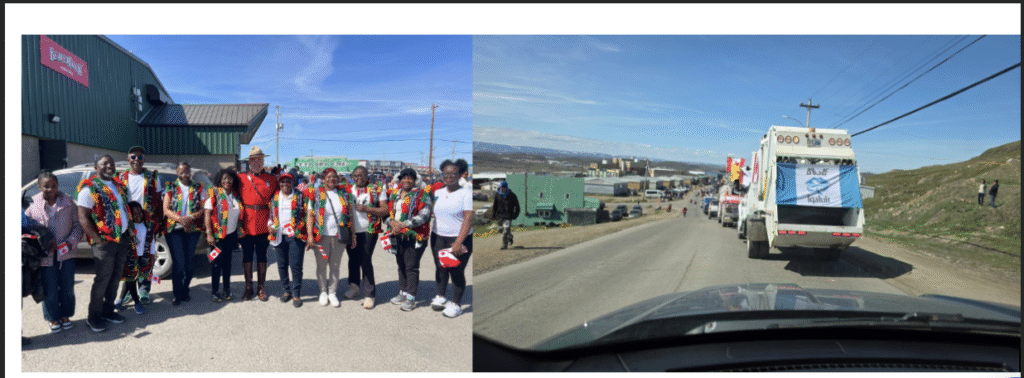
Real Life Institute staff & volunteers participating in the 2026 City of Iqaluit Canada Day Parade
From soccer to shared meals and the Canada Day parade, this celebration showed the power of diversity. As a volunteer, I already look forward to being part of the next edition and continuing to celebrate what makes Iqaluit truly North and strong – its people.
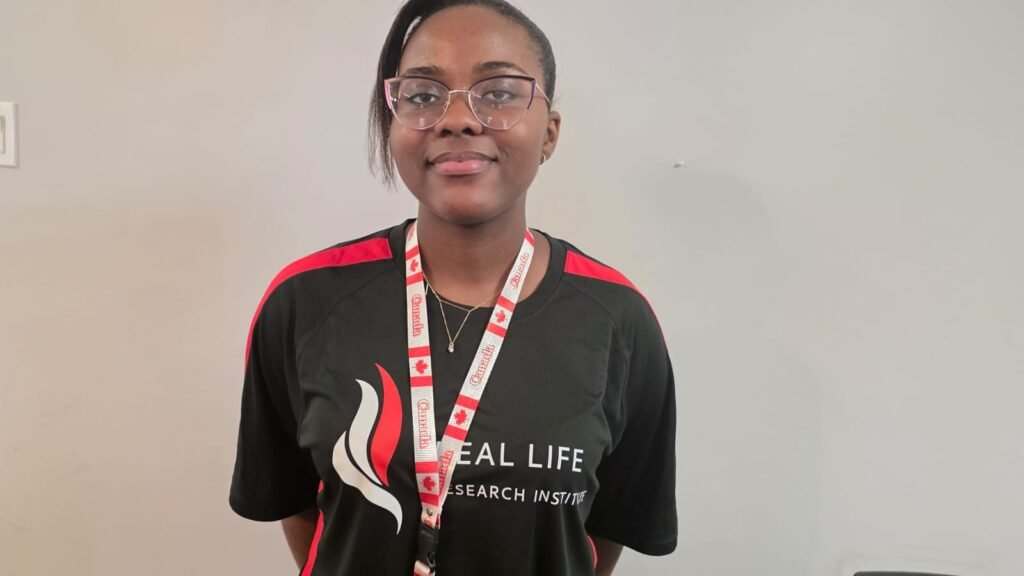
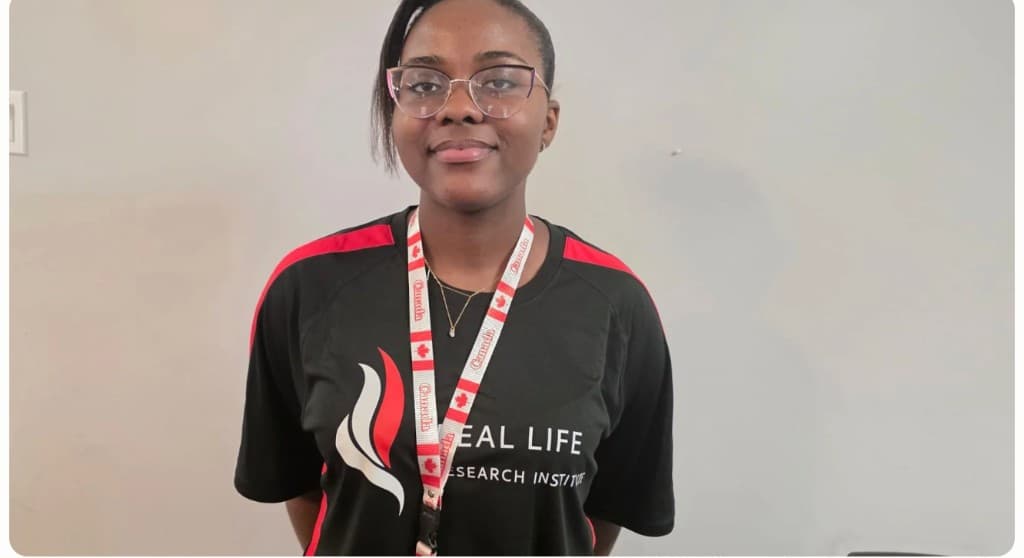
By Faithfulness Mulango
Real Life Research Institute Volunteer.